We manage your Facebook and Instagram Ads campaigns for ecommerce and brands that want to sell, not just show up in the feed. Audiences, creatives, remarketing and measurement working as one system.
Request Meta Ads review →Some accounts get plenty of impressions and likes but few sales. Others sell, but can't scale because no one knows which creative or which audience is actually working.
Without smart targeting, the budget is spread across people who were never going to buy from you.
On Meta your ad competes with friends' photos and memes. If it doesn't hook in the first second, it doesn't exist.
Without a clean pixel and Conversions API, Meta optimizes blindly and the ROAS you see isn't the real one.
The click arrives but the product or page doesn't convert. The work doesn't end with the ad.
Campaigns in feed, stories, reels and explore, designed to sell, not just to add reach.
Custom, lookalike and interest audiences, built from your data and your real customer.
Angles, copy and formats that stop the scroll. We test variants and keep what sells.
We recover those who already visited your site or saw your product, at the moment they're most likely to buy.
For ecommerce: product feed and catalog campaigns set up properly to scale sales with control.
We set up tracking so Meta optimizes with real data and you know what drives sales, not just clicks.
Online stores whose product is eye-catching and has margin to scale with creative and catalog.
Businesses that don't just wait to be searched for: they want to create desire and reach people who didn't know they needed them yet.
Where the value of each customer justifies investing to acquire them and win them back with remarketing.
The Meta Ads that performs best arrives with a message, a creative and a landing that support the purchase.
On today's Meta, the ad decides more than the audience. That's why we prioritize angles, messages and formats that connect.
Advantage+ and automatic bidding work, but they need a clean pixel, enough creatives and a well-planned account.
CTR or CPM isn't enough for us. We want to know if there are more sales, better ROAS and a basis to scale.
When a creative and an audience perform, we expand without breaking what already converts.
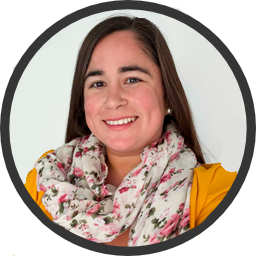
A specialist in Meta, Google and Instagram Ads. Celia designs the audiences, creatives and measurement of your Facebook and Instagram campaigns. The person who builds the strategy is the one who runs it: no middlemen.
Running Facebook Ads and Instagram Ads well is less about secret audiences and more about a clean structure, a steady flow of creatives and measurement you can trust. This is how we split the work in a Meta advertising account.
Every campaign starts from the objective Meta will optimize for: sales, leads or traffic. We choose the one that matches the business goal and keep the structure simple, with fewer campaigns and enough budget in each, so the algorithm gets out of the learning phase instead of splitting data across dozens of ad sets.
On Meta, the creative does most of the targeting. We test one variable at a time (hook, angle, messaging, format or offer) across static images, video, carousels and UGC-style pieces, and we keep the variants that bring sales, not the ones that only collect likes. When performance drops because the audience has seen the same ad too often, we refresh the creative before raising the spend.
Meta can show your ads in the Facebook and Instagram feeds, stories, reels and other placements across its platform. We usually start with automatic placements and broad audiences, then check where the budget actually goes and exclude what does not convert. Custom and lookalike audiences built from your customers and your site visitors feed remarketing and give the algorithm a better starting signal.
The pixel and the Conversions API have to report the same purchases or leads your store or CRM records. We compare Meta’s numbers with real orders, because attribution windows can make results look better than they are. Every month you get a report on sales, cost per acquisition and ROAS, plus the creatives we tested and what comes next.
Paid social media advertising generates demand: it shows your product to people who were not searching for it yet. Search ads capture demand that already exists. That is why Meta works best for brands and products with a strong visual hook and enough margin to pay for reaching new customers, and why it often runs alongside Google Ads campaigns rather than replacing them.
Budget matters too. Meta’s algorithm needs a minimum number of conversions each week to learn. A simple example: if a sale costs you €20 to acquire, a budget that only buys three sales a week will keep the campaign in the learning phase for a long time. In that case it is better to optimize for an earlier step, such as add to cart, or to concentrate the spend in fewer campaigns.
If you want Meta and Google planned as one budget, see our SEM service for Google Ads and Meta Ads. If the problem starts after the click, the issue may be the store itself: how to improve the conversion rate of an online store.
Yes. We define angles and scripts and work on the creatives (or coordinate with your team), because on Meta the ad is 80% of the result.
Usually both: Meta distributes the budget where it works best. What decides the result is the creative and the measurement, not the network itself.
It can work if there's margin, a product that sells and some capacity to create creatives. If it's not the right time yet, we'll tell you honestly.
Meta gives fast reading, but useful learnings come after the pixel's learning phase and a few tested creatives.
You should. The business portfolio, the ad account, the pixel and the product catalog belong in your company’s name, and the agency works on them as a partner with the permissions it needs. That way, the data and the learning history stay with you if you change agency or bring the work in-house. If an agency asks to run your ads from its own account, ask what happens to that data when the contract ends.
Enough for the campaign to learn. Meta needs a steady number of conversions each week, so the budget depends on how much each sale or lead costs you. If the budget is small, it is better to run one well-built campaign than several half-funded ones, or to optimize for an earlier step such as add to cart. The ad spend is separate from our fee and is defined with you before launching.
Tell us about your project and within 24 hours we will tell you where the opportunity is and whether it makes sense to work together.
Request Meta Ads review →